Issue monitoring for topics that affect you
Which questions, concerns and debates are emerging around topics that affect your organisation? Use Coosto to follow how online conversations develop, even when your organisation isn't mentioned. Look into what is changing, gather the context behind it and decide better where extra explanation, monitoring or follow-up communication is needed.
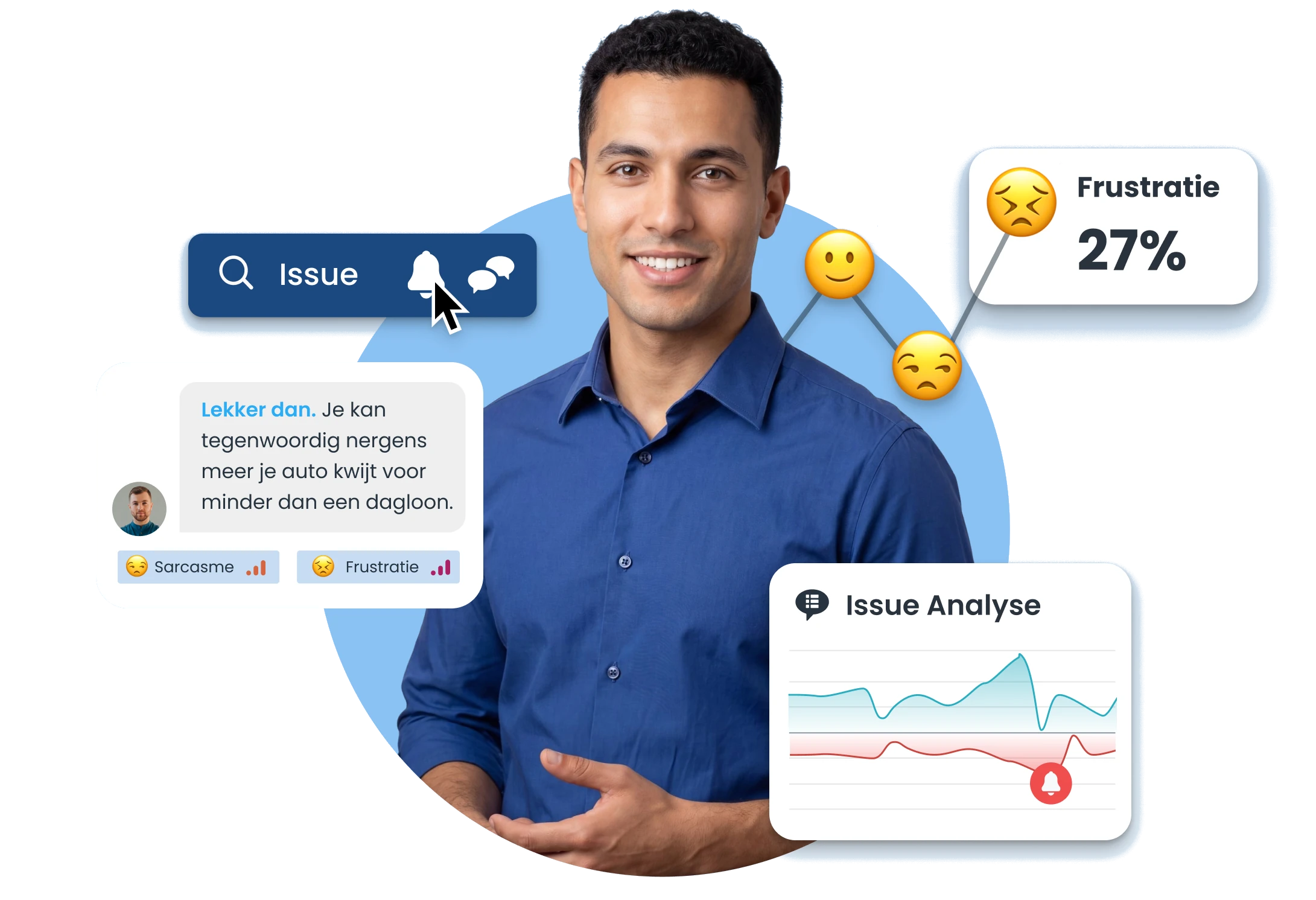
- Spot what needs attention
- Understand what is changing
- Back up your communication

See which development needs attention
Around new parking policy, for example, reactions about the rates appear, while people also ask questions about visitor permits without mentioning the municipality. The number of posts alone doesn't tell you what deserves attention.
Look into which questions keep coming back, where confusion arises and in what context reactions are posted. That way you see more clearly which topics need further explanation, research or monitoring.
Back up where extra communication is needed
Your advice is stronger when you can show which questions or concerns keep coming back and what your conclusion is based on. Use posts and analyses from Coosto to interpret a development and compare it with the information your organisation has already shared.
That way you can better judge where explanation is missing, which message needs clarifying and which topics you want to look into further before adjusting your communication.


Keep following developments without searching manually
Create a search query in Listen around the topic you want to follow. Combine relevant terms and exclude words, sources or authors that don't fit your monitoring question. Set up alerts for new results or changes in activity or sentiment.
When you get a notification, open the underlying posts and see which questions, sources and angles stand out. That way you don't have to keep searching manually and you focus on developments that deserve further assessment.
Tips

Listen: know what is happening around your organisation.
Share signals with the context that goes with them
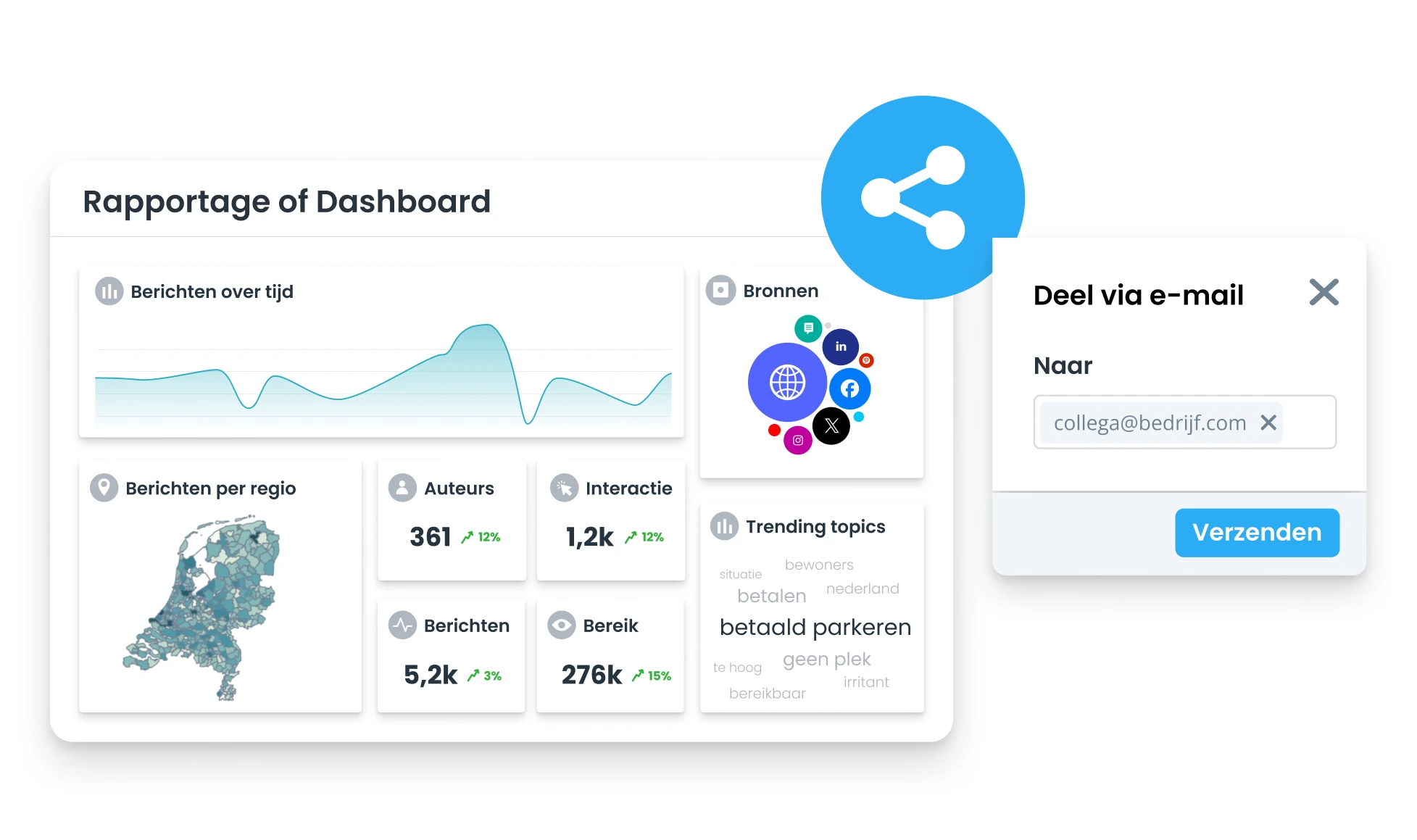
Use saved search queries in dashboards and reports to follow developments over time. Share not just numbers or sentiment, but also which questions, arguments and sources are behind a change. That gives colleagues enough context to assess a topic and helps you explain why you want to keep following something, look into it further or include it in follow-up communication.
Features for issue monitoring

Search Helper
Combine search terms and exclusions so you can follow what is being said about a topic more precisely.

Real-time alerts
Get notified of new results or changes you have set and judge faster whether further attention is needed.

Trending Topics
Discover striking words and phrases within your search results and decide which developments you want to look into further.

Dashboards and reports
Follow developments from saved search queries over time and share relevant signals with the context that goes with them.
See which signals call for follow-up
See in a demo how to use Listen to follow a topic that is relevant to your organisation. We show how to define a search query, look into changes and view the posts behind a development. You'll see how to go from scattered online signals to better-founded choices about monitoring, explanation or follow-up communication.
During a demo we show you:
- Combining search terms and excluding irrelevant results.
- Viewing sources, authors and underlying posts.
- Setting up alerts for your saved search query.
- Showing developments in dashboards and reports.
Frequently asked questions about issue monitoring
How is it different from media monitoring and crisis monitoring?
With issue monitoring you follow a specific topic over a longer period, such as a policy issue or a public debate. Media monitoring focuses on coverage across different media and the reactions to it. Crisis monitoring centres on an acute situation in which developments may need assessing more quickly. So the difference lies mainly in the topic, the time frame and the reason for monitoring.
Which sources can I follow with Coosto?
Listen collects posts from social media, online news, blogs, forums and reviews, among other sources. Which posts and data are available differs per source. Keep this in mind when defining your search query and interpreting results. By combining several relevant sources, you bring different online signals about the same topic into view.
Do online conversations give a complete picture of public sentiment?
No. Online conversations show what people share within the available sources and don't automatically represent all residents, students or other people involved. So use the results as signals and, where needed, combine them with other information, such as questions you receive directly or research. That way you avoid mistaking online volume for a complete picture of public sentiment.