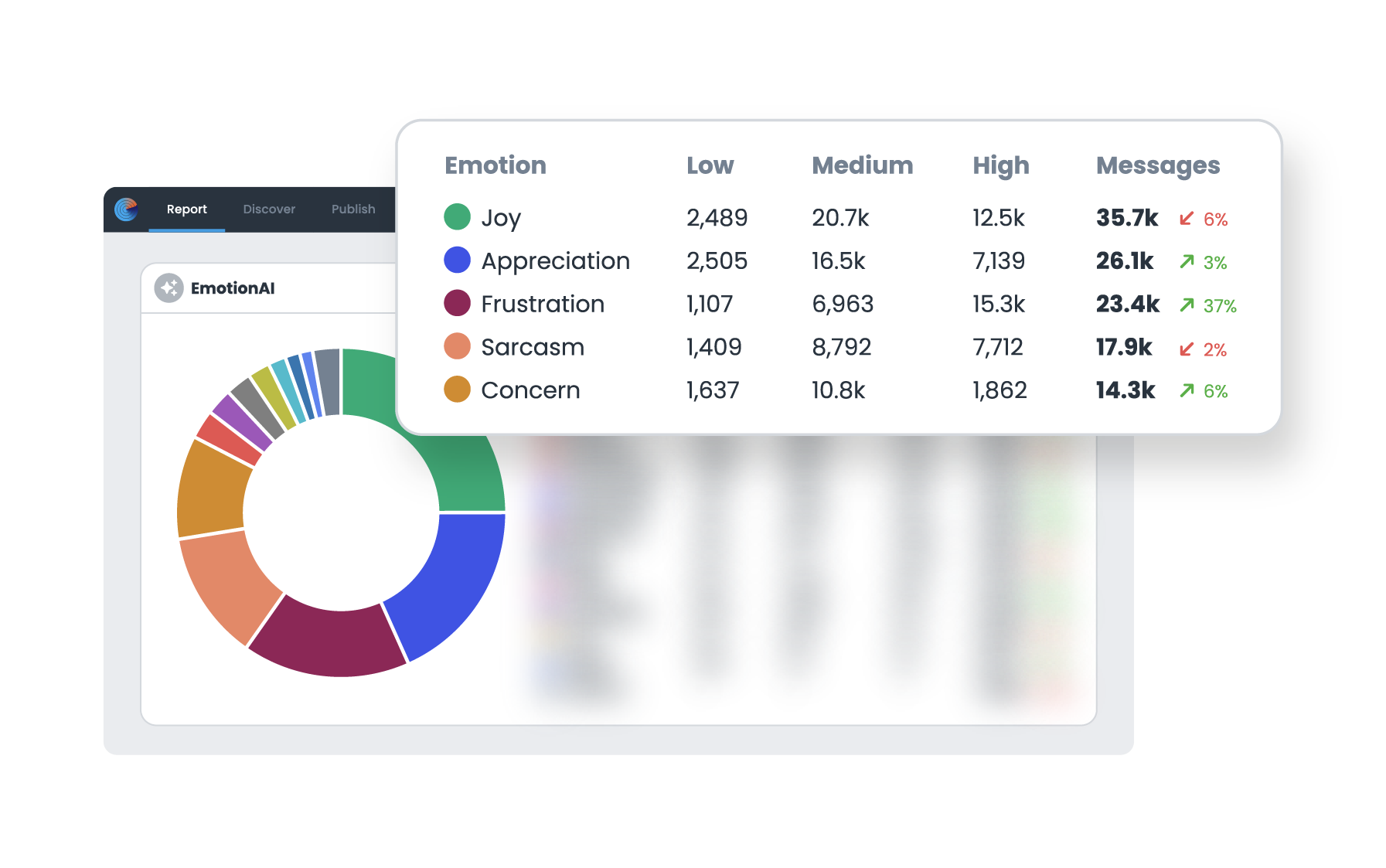
Make reputation visible as an emotional profile, not just a single score

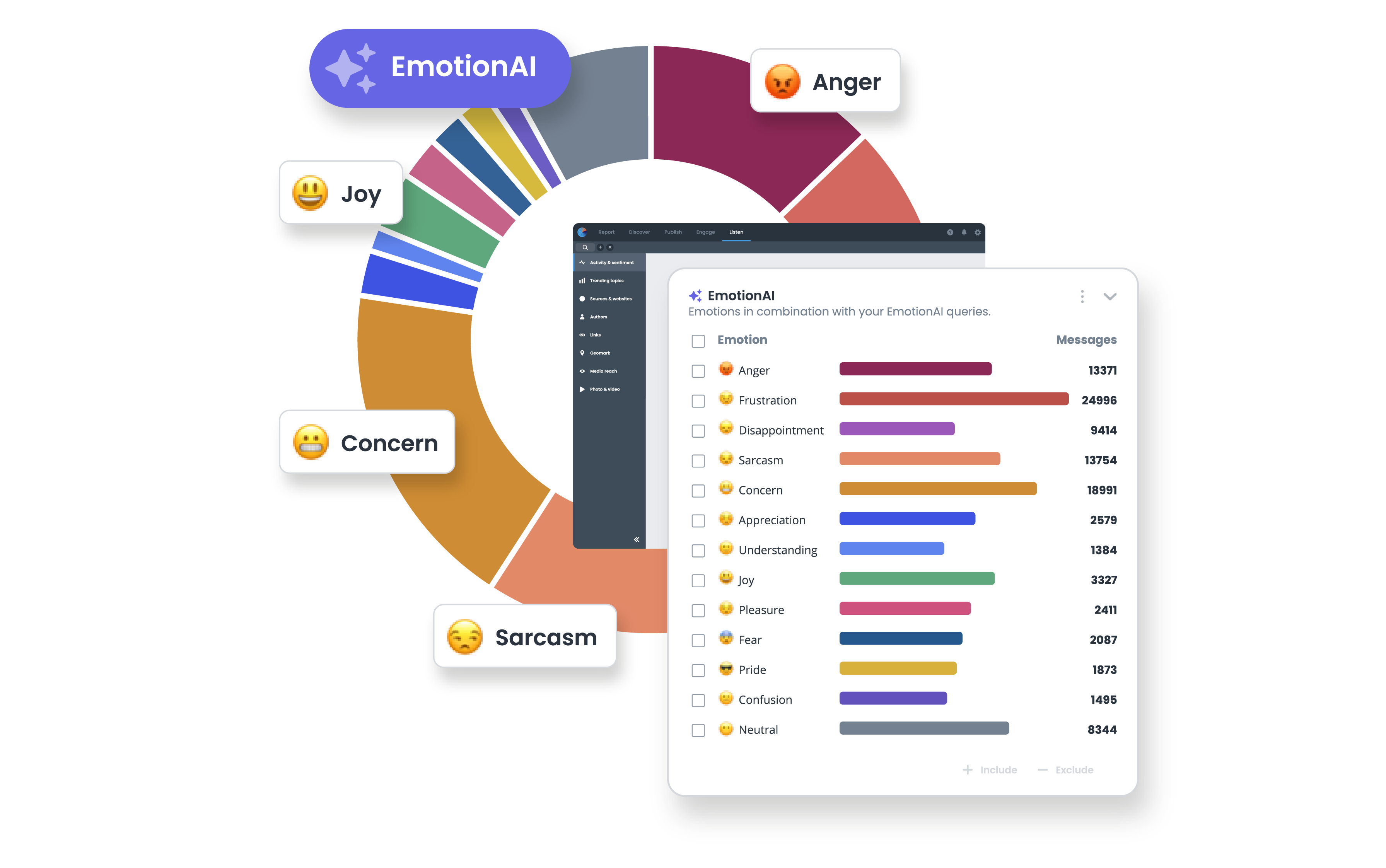
With EmotionAI, you can track which emotions your brands and products trigger and how they shift over time. We measure this using 13 emotions:

  • Fear
  • Pride
  • Delight
  • Confusion
  • Anger
  • Frustration
  • Disappointment
  • Sarcasm
  • Concern
  • Appreciation
  • Understanding
  • Joy
  • Neutral

This gives teams more clarity to understand framing, guide communication, and explain reputation trends to stakeholders.

Visual_Engels-1-EmotionAI

Discover undercurrents and tipping points with sarcasm and intensity

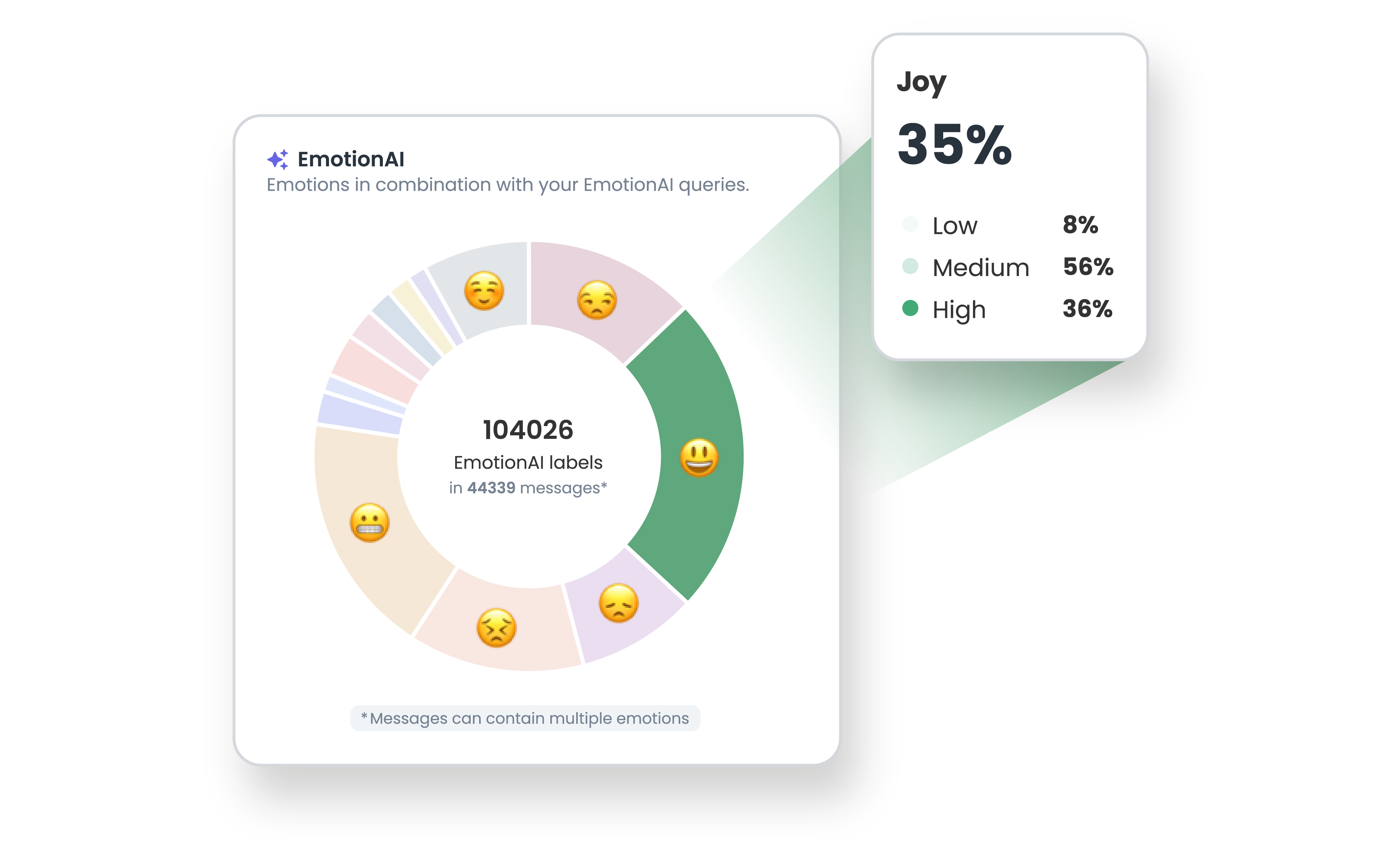
Reputation often shifts subtly before it becomes visible. EmotionAI labels sarcasm as a separate emotion and measures intensity at three levels: low, medium, high. This way, you can see when appreciation turns into disappointment or frustration escalates into high-intensity anger, making monitoring sharper and your alerts earlier.

Visual_Engels-2-EmotionAI

Measure reputation accurately at brand and product level with context-based sentiment

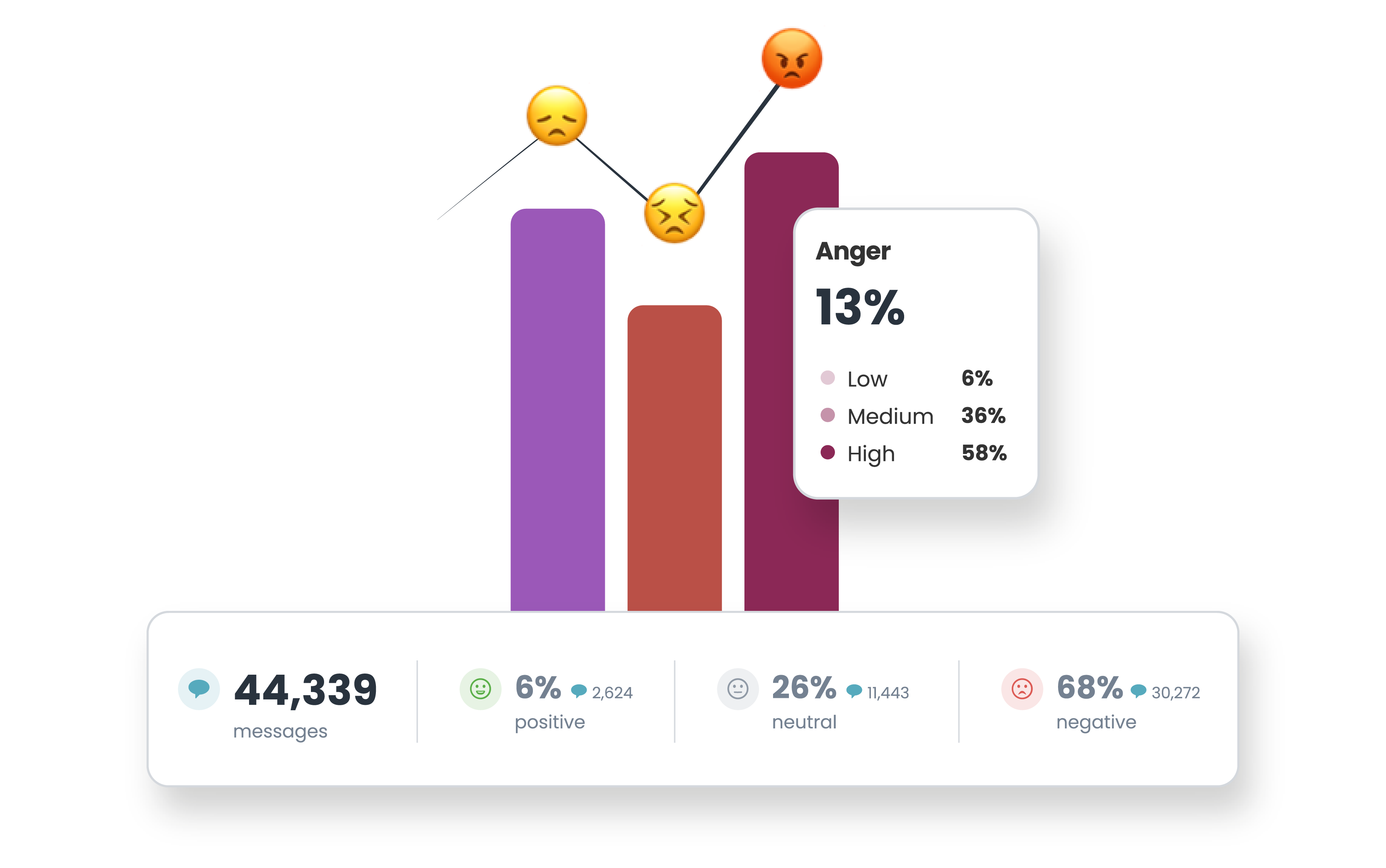
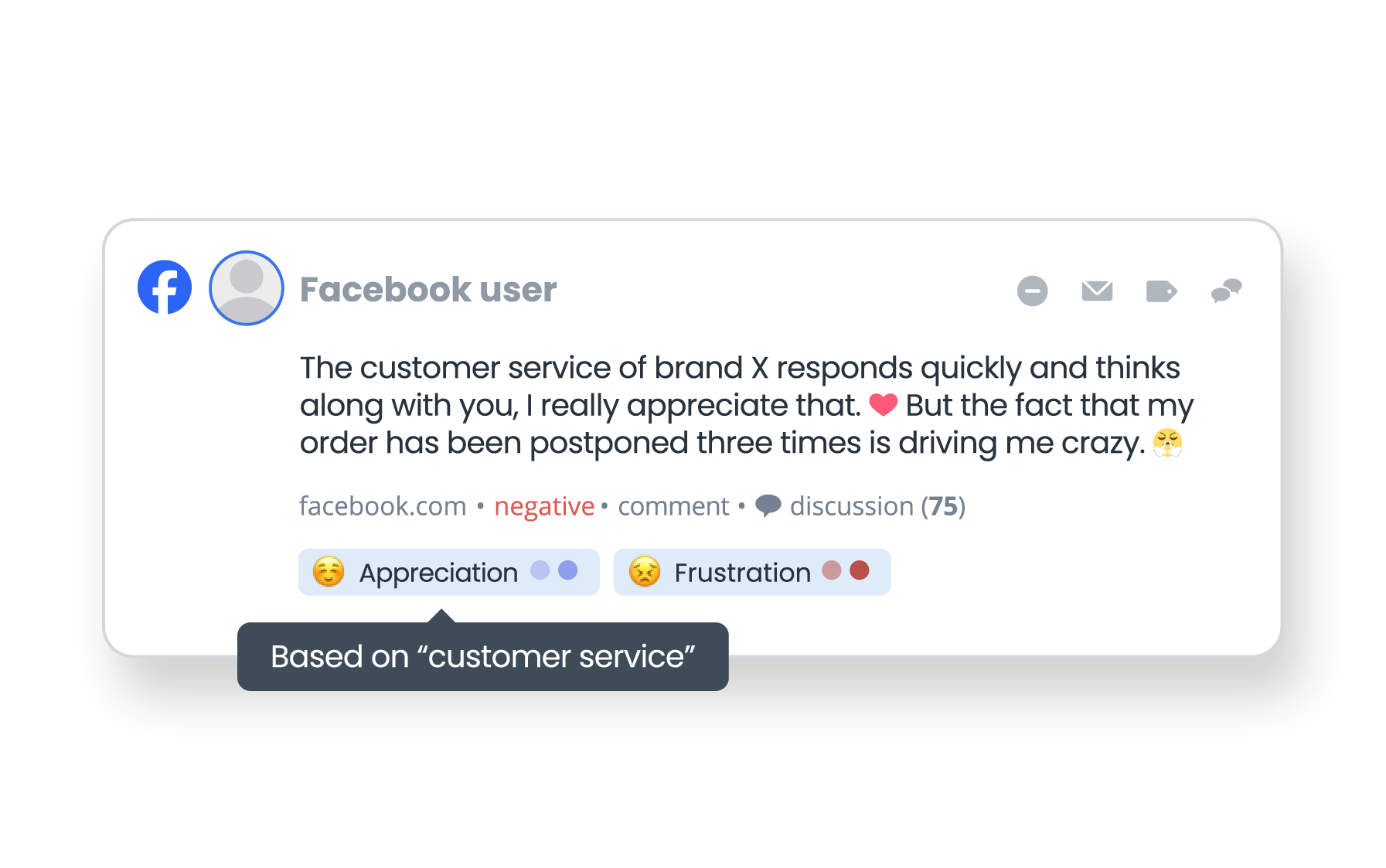
Conversations often contain multiple emotions and topics at once. EmotionAI determines sentiment based on the context around your brand and product names. Even when multiple emotions appear in a single message, the measurement focuses on what is said about your brand or product, delivering a more consistent reputation view without manual corrections.

Visual_Engels-3-EmotionAI

Build real-time dashboards and reports ready to share

EmotionAI monitors social media, news, blogs, and forums and integrates directly with Report. Create dashboards per brand, product, theme, source, or period. Track reputation continuously, compare periods, measure the impact of campaigns, incidents, or employer branding efforts, and support data-driven decisions.

Visual_Engels-4-EmotionAI

Key features of EmotionAI

Emotion labels for reputation insight

Get a richer view with emotions like fear, pride, confusion, appreciation, and understanding, plus neutral.

Sarcasm detection

Reveal underlying tone instead of hiding it in neutral or incorrectly positive labels.

Intensity: low, medium, high

Focus on impact and see when discussions escalate.

Context-based sentiment

Measure sentiment on your brand and products, even in mixed messages.

Cross-source measurement

Use a consistent metric across social media, news, blogs, and forums.

Filters on emotion, intensity, and topic

Segment by emotion, intensity, theme, brand, product, source, and period.

Alerts on shifts and buildup

Receive notifications when anger, frustration, disappointment, or sarcasm increases, or when intensity rises.

Trends over time

Track emotion development by day, week, or month, and compare periods or campaigns.

Dashboards and reports in Report

Create granular reputation insights for communication, marketing, and HR, and share easily with management and executives.

Make reputation measurable through emotion, intensity, and context

Want to learn more about Coosto? 

Our experts in advanced sentiment analysis are happy to discuss the possibilities Coosto can offer you.

A comprehensive overview of EmotionAI, based on thousands of real-world use cases

check

One of our experts will guide you through Coosto’s reputation management tool

check

Frequently asked questions

  • Which emotions does EmotionAI measure?

    EmotionAI labels messages using the following categories:

    • Enjoyment
    • Confusion
    • Anger
    • Frustration
    • Disappointment
    • Sarcasm
    • Concern
    • Appreciation
    • Understanding
    • Happiness
    • Neutral
  • What does this offer compared to positive, negative or neutral sentiment?

    It provides both direction and meaning. You don't only see that sentiment is changing, but also which emotion is driving that change. This makes reputation insights more concrete and far more actionable for decision-making.

  • How does intensity work exactly?

    In addition to the emotion label, each message receives an intensity level: low, medium or high. This allows you to focus analyses, dashboards and alerts on the signals with the greatest impact.

  • What does context-based sentiment for brand and product names mean?

    EmotionAI determines sentiment based on the context surrounding your brand and product names. Even when a message contains multiple emotions or topics, the measurement remains focused on what is being said about your brand or product. This results in more consistent reputation monitoring.

  • Does EmotionAI work across all sources we monitor?

    Yes. EmotionAI measures sentiment across social media, news, blogs and forums, giving you a single, consistent view of your reputation across all channels.

  • Who is EmotionAI for?

    For professionals and teams who want to build and substantiate reputation with data, including:

    • Conversions and KPI's per campaign
    • Social media performance & website traffic and conversions
    • Marketing and brand teams
    • HR and employer branding
    • Webcare/customer service managers
  • Can I report at product level and track reputation over time?

    Yes. In Report, you can create dashboards and reports per brand name, product name, theme, source and time period. This allows you to continuously monitor reputation development and clearly measure the impact of campaigns and events.