Campaign monitoring for reactions and results
Your campaign is running. Which posts get attention and which questions keep coming back? Follow with Coosto how your campaign content performs and what is being said about it online. That way you see sooner where extra explanation is needed and better support what you want to adjust during or after the campaign.
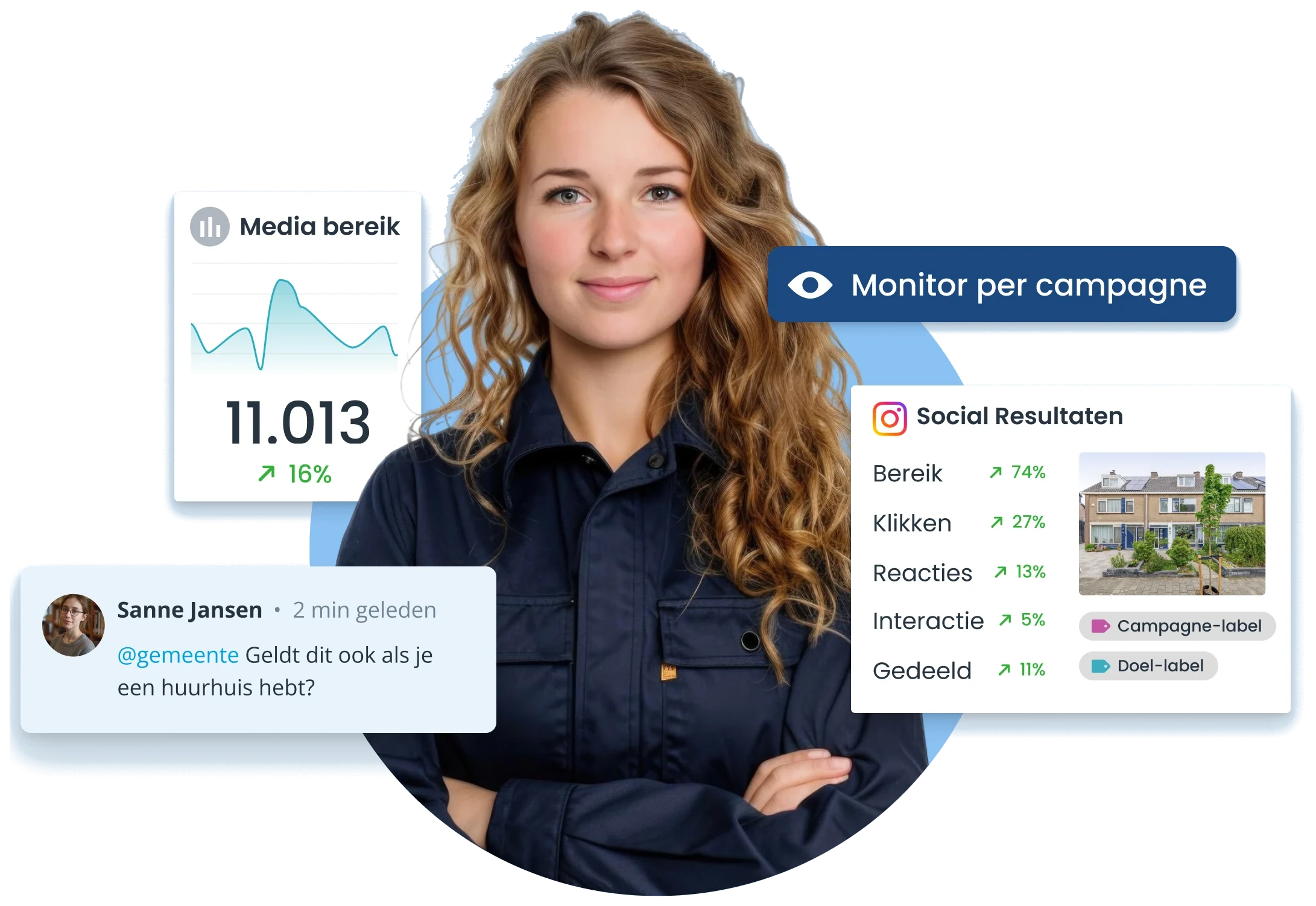
- Recognise where explanation is needed
- Compare your approach
- Support your follow-up
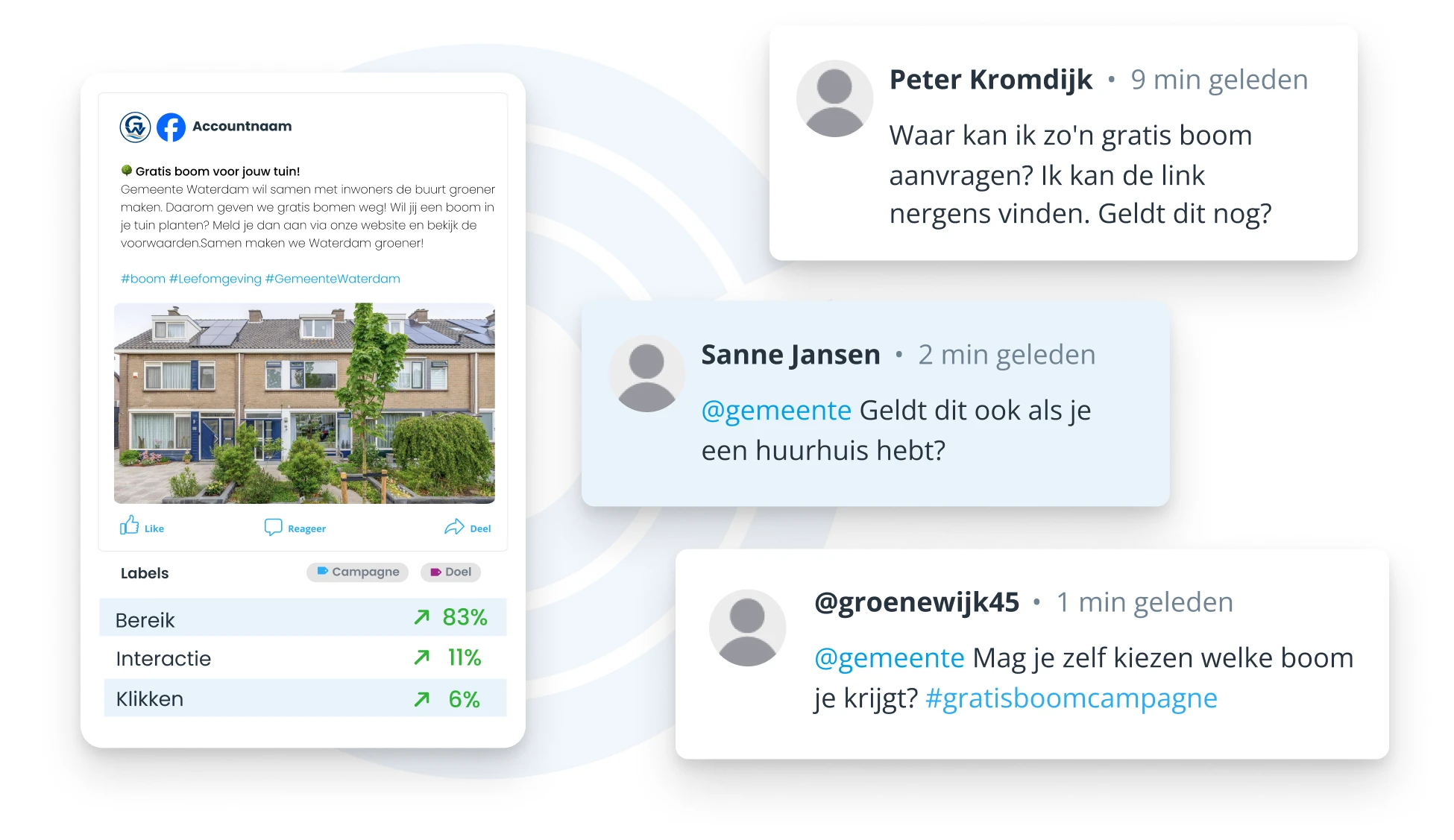
See where your campaign needs extra explanation
Reach and interactions show how much attention your campaign content gets, but not which questions the message raises. Reactions may be about practical consequences, while elsewhere another part of the topic is being discussed. A peak in attention can also be linked to external coverage. By looking at the conversations behind it, you see better which parts of your campaign need clarification or further follow-up.
Turn questions into more targeted follow-up communication
Set recurring questions against the information your campaign already provides. Do several reactions, for example, concern the same practical step? Look in Coosto Listen at what is written about it and which context plays a role. That way you can assess whether existing explanation is sufficient or a scheduled post needs sharpening. That focuses your follow-up communication on questions that actually come back, rather than on assumptions.
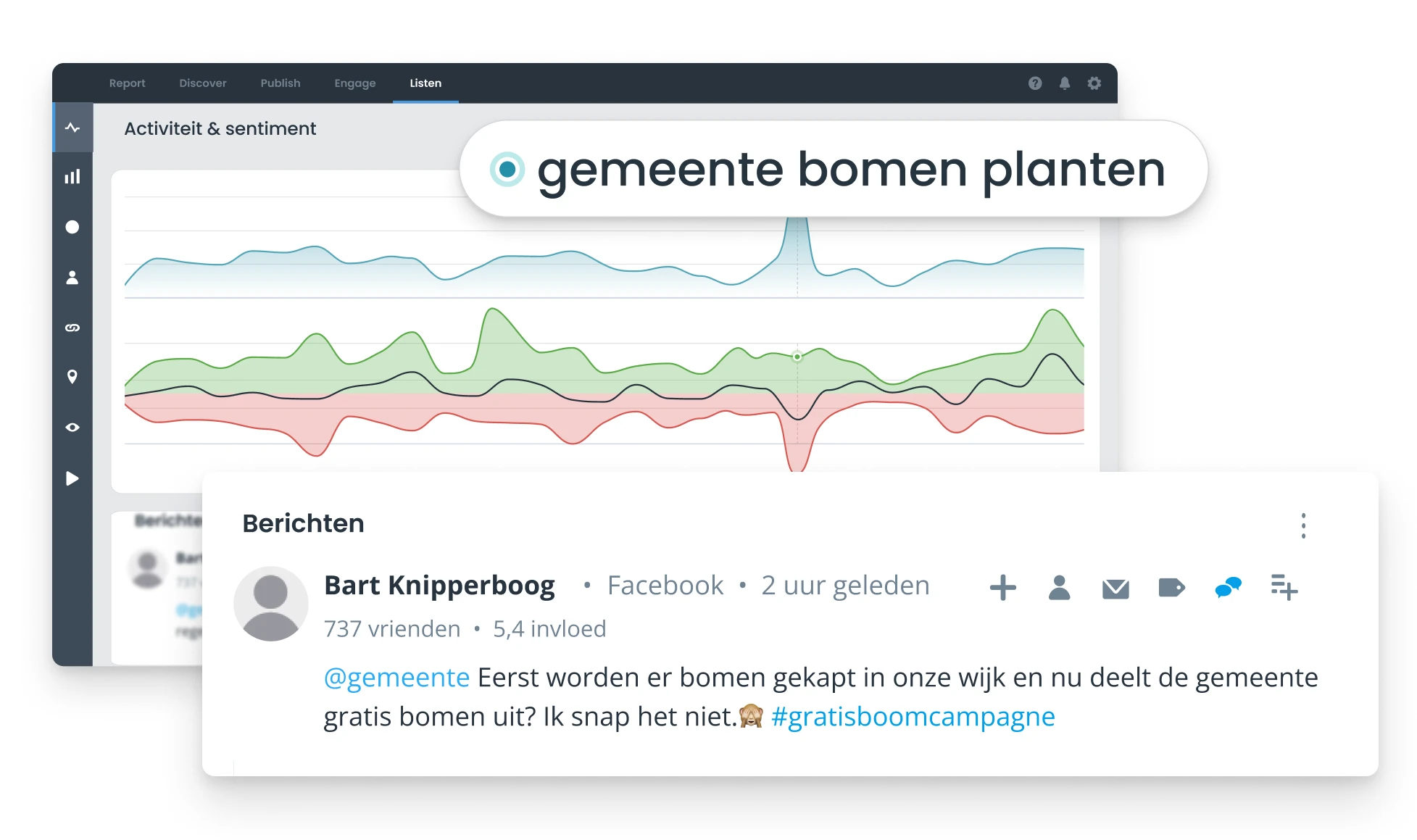
Keep following relevant campaign conversations
In Coosto Listen, create a search with campaign terms and relevant topics. Narrow the results with exclusions, sources and a measurement period. Set alerts for changes in activity or sentiment and look at the underlying posts when you get a notification. That way you don't have to search manually all the time and can assess faster whether a development is really linked to your campaign and needs further attention.
Tips
Use results for your next campaign choice
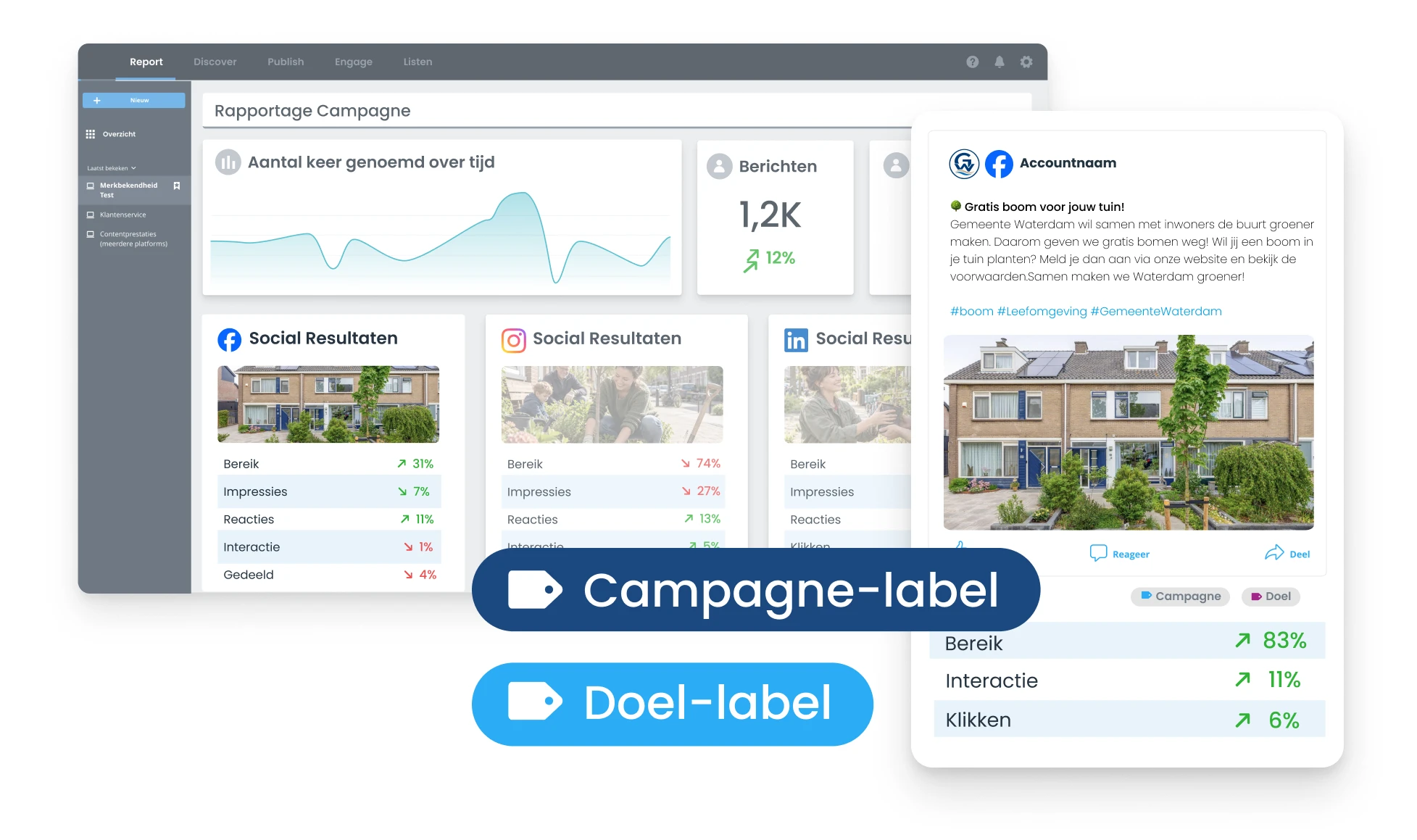
Give campaign posts a recognisable label in Coosto Publish and compare reach, interactions and clicks per post or channel in Report. Assess those results against your campaign goal and combine them with the questions and reactions you have followed. That helps you better support which message, format or channel you want to continue, adjust or test further in a next plan.
Make campaign results usable for colleagues
In your evaluation, include not only figures but also the context behind them. Describe which questions came back, which developments may have had an influence and how you scoped the results. Use dashboards and reports to share those insights. That way colleagues get not only an overview of performance but also a better-founded picture of what needs attention in follow-up communication.
Capabilities for campaign monitoring

Searches
Narrow down campaign conversations with search terms, combinations and exclusions, so you follow more relevant signals.

Alerts
Get notified of configured changes and decide faster which developments you want to investigate further.

Campaign labels
Group campaign posts, so you can compare and evaluate related content as a whole.

Scheduled reports
Share campaign results at fixed moments, so the colleagues involved work from the same information.
See what you can improve during and after a campaign
Bring your campaign question to a demo. We show how you find relevant conversations, compare your own campaign posts and bring results together in a report. That way you see how to use campaign monitoring to plan additional explanation, interpret results better and support your next communication choices.
During a demo we show you:
- Build a search around your campaign.
- Investigate the posts behind changes and alerts.
- Compare campaign posts as input for your next plan.
- Bring relevant results and context together in a report.
Frequently asked questions about campaign monitoring
Which sources can I use for campaign monitoring?
Coosto Listen searches available posts from, among others, social media, online news media, blogs, forums and reviews. Which posts and data are available differs per source. Your analysis therefore concerns the posts found within your search, not all conversations about your campaign. Keep that scope visible when you share results or draw conclusions.
How do I check whether found posts are relevant?
Read whether a post is about the campaign itself, the broader topic or another trigger. Also check the publication date and the context of the conversation. Use that assessment to exclude irrelevant results and refine your search where needed. That prevents isolated mentions from weighing unjustifiably heavily in your evaluation.
Can I also include website traffic in my campaign analysis?
Via the GA4 integration, you can view social media performance alongside website traffic and conversions in Coosto Report. Which data is usable depends on how your measurement and attribution are set up. A measured conversion does not automatically prove your campaign was the cause, but it can give extra context about what happens after a social media post.
Does campaign monitoring prove my message is understood?
No. Online reactions can offer indications of questions, unclear points or topics that need extra explanation, but do not automatically represent your whole audience. Reach and interactions likewise do not prove understanding or behaviour change. Use campaign monitoring to recognise signals and decide follow-up questions; to establish understanding, additional research is needed.