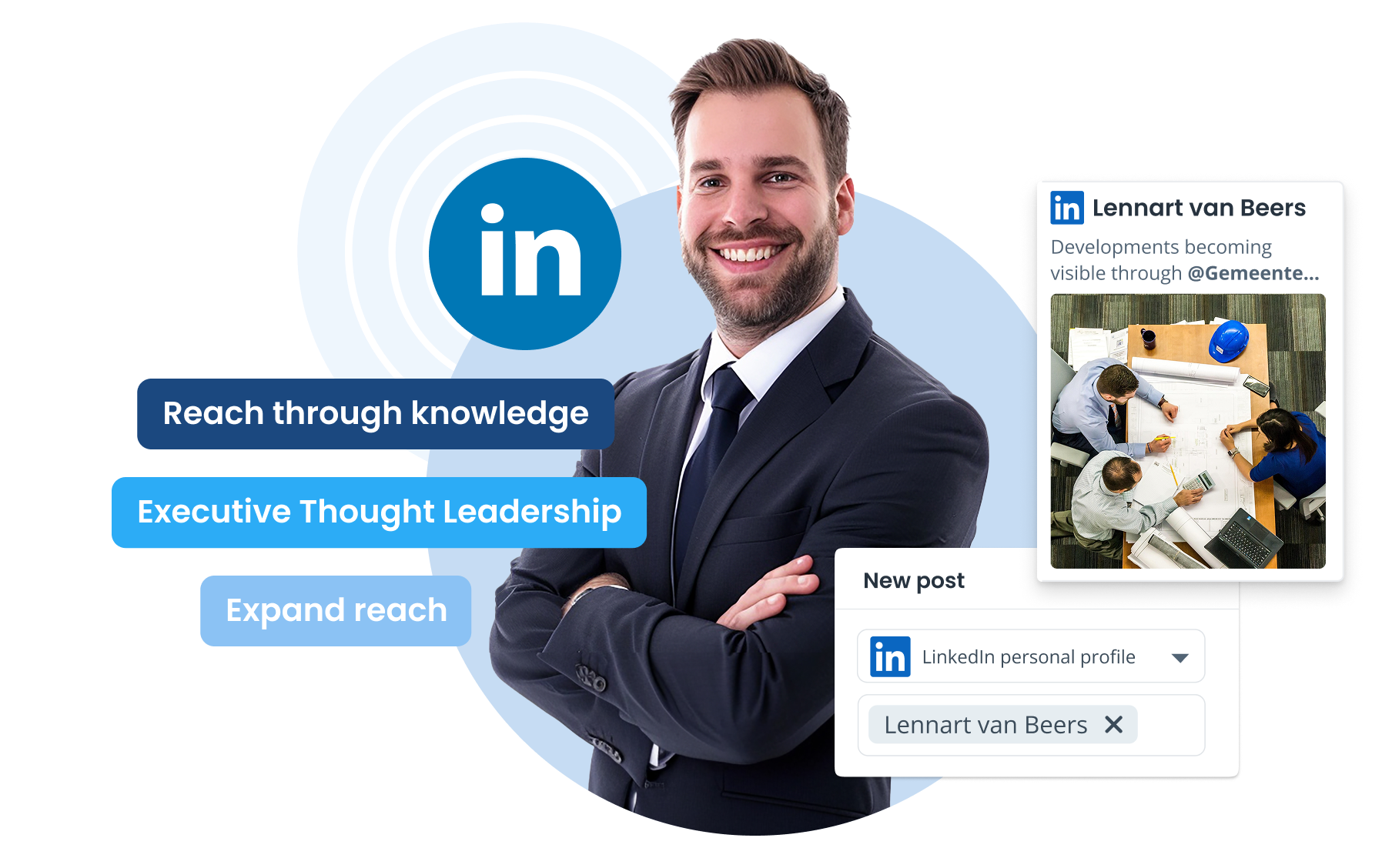
A company page can announce what's changing. An expert can explain why, which considerations play a role, and what it means in practice. The OECD Trust Survey 2024 found that only 39% of respondents consider their national government's communication about policy changes adequate. The OECD highlights the importance of explaining the reasoning behind decisions.

Personal LinkedIn profiles also open the door to other networks. According to LinkedIn, employees have on average ten times more connections than their organisation has followers. That says nothing about the reach of an individual post, but it does show the extra network personal profiles can unlock.

Let experts explain what decisions, figures and changes mean for residents, clients or other target groups.
Share knowledge not only through your company page, but also through the professional networks of your experts.
Make clear which people within the organisation can explain specific topics and issues.
Plan content for experts alongside your other social media content, so it doesn't depend on separate, one-off publishing moments.
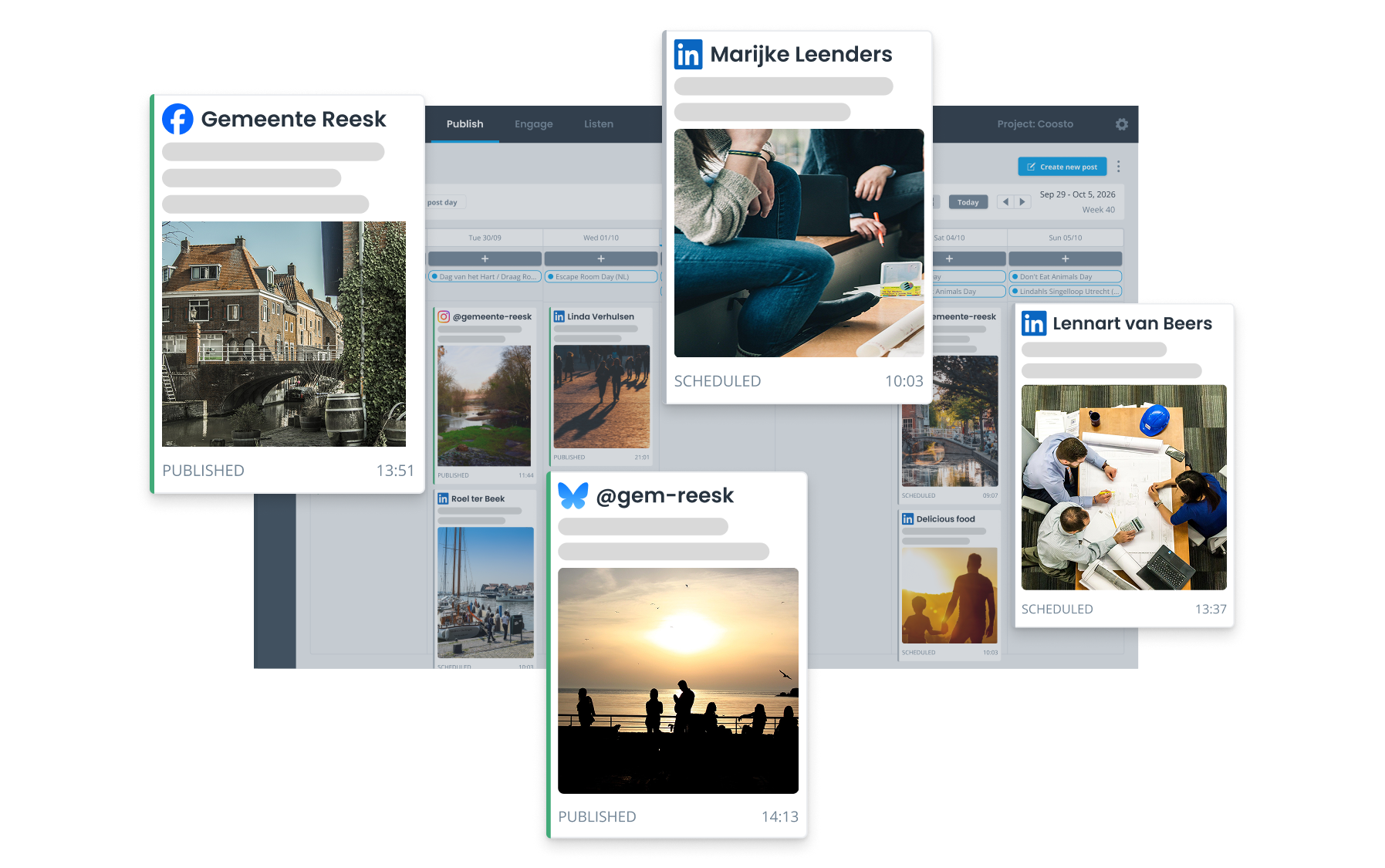
Marketing and Communications plan content for the company page and personal LinkedIn accounts in Coosto Publish, alongside other social media content. This means content for experts doesn't need a separate planning process, and you can align publishing moments from within the same calendar.

See how you can bring content for executives, directors and subject-matter experts into the same planning as your other social media content.
how to plan content for the company page and personal LinkedIn accounts in Coosto Publish
how to use LinkedIn Advocacy to publish through personal LinkedIn profiles
how to bring expert content into your existing social media planning
Executive Thought Leadership means that executives, directors and subject-matter experts share knowledge, experience and opinions on topics they know well.
It doesn't have to be an executive or director. Policy and subject-matter experts can also take on this role, as long as their knowledge is relevant to target audiences, partners or peers.
Start with topics the expert has knowledge and experience of. Think of questions from the public, developments in their field, lessons from projects, research findings, and changes in policy or services.
Not automatically. Which accounts are suitable depends on the role, the organisation and applicable communication guidelines. Make clear agreements in advance about ownership and account use.